
Renovating an old house: what to review before you start
This is an orientation guide to approaching the renovation of an old house from a construction standpoint. Renovation is not the same as 'doing a refurbishment': before defining the works it is worth reviewing the structure, the roof, the façades, the dampness and which permits may be needed. It does not replace a project or the judgement of a technician, but it helps you order the priorities before you start.
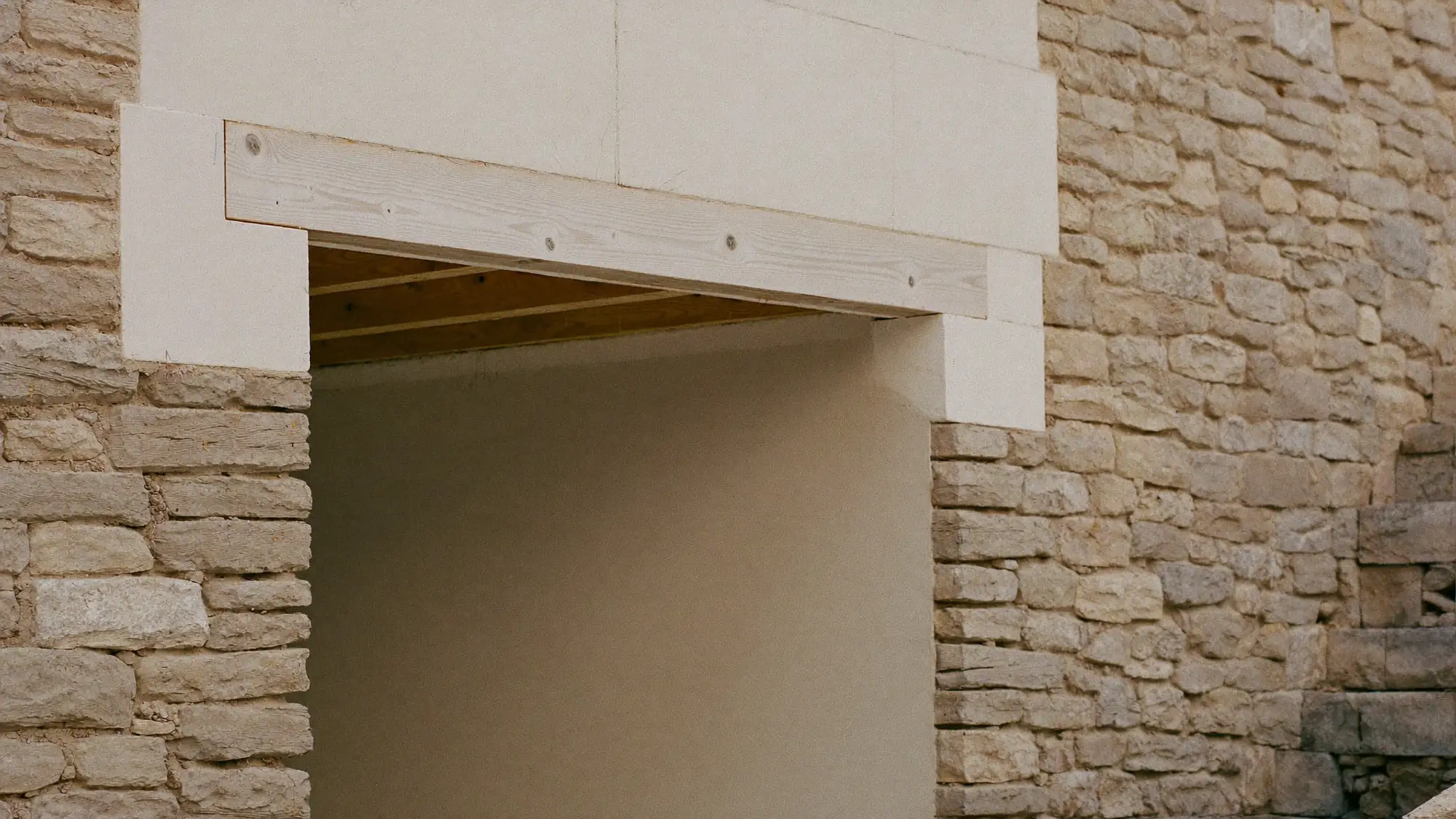
- Before defining the works, it is worth understanding the real condition of the house: structure, roof, façades and dampness.
- Structure, roof and dampness are reviewed before the finishes, not at the end.
- Permits and technical documentation depend on the scope of the works and the municipality.
- Old houses often call for prioritising and working in phases.
- OBRA.cat can help define and carry out the construction scope, coordinating with architects, surveyors or technicians when needed.
First: understand the real condition of the house
Renovating an old house is not the same as 'doing a refurbishment'. Before choosing finishes or layouts, it is worth understanding the real condition of the house, because that determines the scope and priorities of the works. This guide is for orientation: it helps you get your bearings, but it does not replace a technical visit or a project.
On a first look, it is worth paying attention to a few signs. None of them, on its own, is a diagnosis, but they help identify where to look more closely:
- visible cracks or fissures in walls, ceilings or the façade, which may indicate movement but do not always signal a serious problem;
- the condition of the roof and the roof covering, often the element that most affects everything else;
- damp marks, stains or mould, which are worth reviewing to identify their origin;
- the condition of the façades and exterior cladding;
- the floors, the floor decks and the visible structural elements;
- the installations (water, electrics, drainage), at a high level only, to assess whether they are aged.
With this information you can start to organise the work. What is worth avoiding is deciding on finishes before knowing what is happening with the structure, the roof and the dampness.
Structure, foundations and walls
In an old house, the structure — foundations, load-bearing walls, beams and floor decks — is the first thing worth reviewing, because it determines the safety and the rest of the work. Some cracks are superficial and others may point to movement that calls for the judgement of a technician; the scope cannot be confirmed from photos alone.
When the work affects or could affect the structure, the assessment of an architect or surveyor is usually needed and, depending on the case, a project. The construction side — reinforcement, replacing elements or consolidation — is something we carry out once it has been defined; to get your bearings, you can see our foundations, reinforced-concrete structures and renovation services.
This guide does not include instructions for intervening on your own: the assessment and repair of structural elements must be carried out with technical judgement and proper safety measures.
Roof, façade and water
In many old houses, the roof and façades are the priority: they are the envelope that protects the house from water, and when they fail, problems end up appearing inside. That is why it often makes sense to resolve the envelope first before investing in interior finishes.
The following usually require a construction review:
- the roof or roof covering, where the substrate, tiles, membranes and drains determine watertightness;
- the façades, with cracks, joints or cladding that has lost its watertightness;
- the waterproofing of surfaces exposed to water, such as terraces or flat roofs.
Reviewing these elements requires safe access and, often, a visit. It is not advisable to climb onto roofs or work on façades on your own: this part is carried out by personnel with the appropriate means and safety measures. If you want to go deeper into how water ends up causing dampness, we explain it in the guide to dampness at home.
Dampness and interior renovation
Dampness is one of the most common problems in old houses, and it is worth treating it before the finishes. Repainting or covering a stain without resolving its origin is usually not enough: the dampness tends to come back. That is why, in a renovation, the first step is identifying where the water or vapour is coming from, and only then deciding on the finish.
The origin can vary greatly — filtration from the roof or façade, rising damp from the ground, condensation or installation leaks — and each case calls for a different response. Our dampness service is based on this idea, and interior renovation — floors, cladding, layout — is tackled afterwards, often as part of a full renovation.
This guide deals with the construction side of dampness, not with health. If you are concerned about possible health effects, consult a health professional.
Permits, major or minor works and technicians
The scope of the renovation determines what documentation and procedures may be needed. Updating finishes is not the same as working on the structure, the roof or the façade: the greater the technical impact, the more likely it is that a project and more extensive processing will be required.
To get your bearings on the usual differences, these orientation guides may help:
- the difference between major and minor works;
- what a prior works notice is;
- and, for Barcelona specifically, building permits in Barcelona.
The specific requirements depend on the scope and the municipality, and the final decision always rests with the competent administration. That is why it is worth checking the official procedure before starting, and engaging an architect or surveyor when the project requires it.
Habitability, building inspection and owners' associations
Depending on the type of property and the intended use, a renovation may be linked to habitability, the technical inspection of the building or the owners' association. These are matters that depend on each case and are worth bearing in mind before defining the scope.
If the house is part of a multi-unit building, the owners' association may be involved and, depending on the age of the building, the technical inspection may also apply; we explain this in the guide to the building inspection and owners' association. In some cases, especially after a major renovation or for first occupation, the habitability certificate from the Generalitat de Catalunya may apply.
In some periods public grants for renovation exist, but the conditions change with each call and cannot be taken for granted. This guide stays at a high level on these matters: the specific requirements are set by the regulations and the administration, and it is worth checking them at official sources or with a technician.
How to prepare the information before asking for a quote
To guide you better from the start, it usually helps to have to hand:
- photos or videos of the house, inside and out;
- the address and municipality of the property;
- the approximate built floor area;
- a description of the current condition and the intended use;
- existing drawings, if you have them;
- any problems you are already aware of (cracks, dampness, roof in poor condition);
- whether an architect, surveyor or technician is already involved;
- whether the house is detached or part of a building with an owners' association.
No sensitive documents or unnecessary data are needed for a first construction orientation.
What role can OBRA.cat play?
OBRA.cat is a construction company. We do not issue technical reports or replace the architect, the surveyor, the property administrator or the administration: we coordinate with them. In the renovation of an old house, we can:
- review the construction scope of the work from photos, videos or existing documentation;
- interpret with care what can be seen and what works may be needed, without making firm diagnoses remotely;
- coordinate with the architect, surveyor or technician when the project requires it;
- prepare a construction scope in phases and by priority;
- carry out the works to the contract and scope agreed in writing.
What we do not do is promise that an old house can always be renovated, or guarantee permits, habitability or grants: these depend on the real condition of the house, the project and the administration.
Tell us about the condition of the house
If you are considering renovating an old house and do not know where to start, you can tell us about it. With a few photos or a video of the house, inside and out, and an idea of its current condition, we can guide you on the next construction step.
If you like, you can tell us about the condition of the house and we will look at how it fits: a first orientation and, if needed, a visit to see it up close. Remember that this guide is for orientation and that each house must be assessed individually.
It does not replace the judgement of a qualified professional or the local regulations in force. Each project must be assessed individually.
Tell us about your project
We'll give you an indicative quote and a clear scope before we start. The timeline and price depend on the project, the ground, the materials, the permits and the finishes.